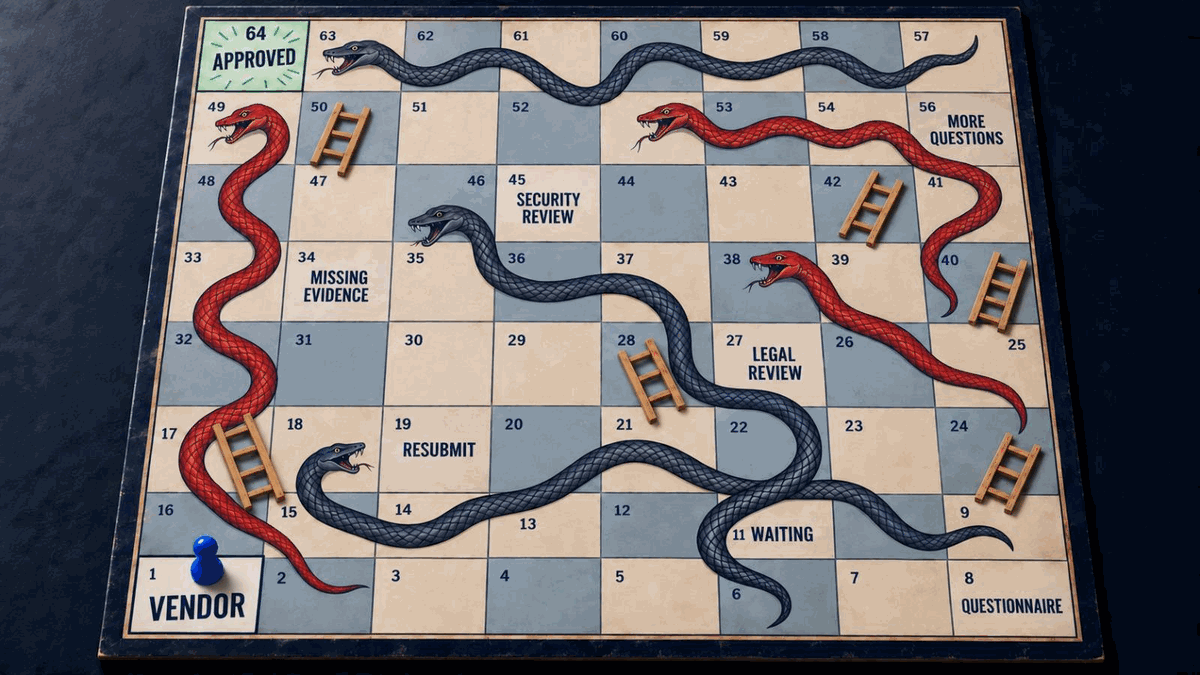
Security teams are expected to help the business move quickly while keeping risk under control. That becomes difficult when the information needed to make a decision is scattered across departments. Procurement knows where the contract stands. Security has the assessment. The business owner understands the dependency. Bringing that information together can take longer than reviewing the risk itself.
This is one of the most practical problems to solve in vendor risk management. Before asking teams to work faster, we need to make sure they can see what they need. Transparency means being able to understand the evidence behind a finding, the work still outstanding and the consequences of accepting a risk. It gives people the confidence to make a decision and the basis to explain it.
The first obstacle is connecting procurement and risk information. Organizations have invested heavily in systems that serve different purposes, and those systems rarely provide a complete view of the vendor relationship on their own. A signed agreement, an open security finding and a pending onboarding request may describe the same supplier without being connected in a useful way.
A practical approach starts with the decisions people need to make. Which information must move between systems? Who owns it? What happens when records disagree? Integration should answer those questions. At Rescana, we approach this through integrations configured around the customer’s workflow, supported by AI that extracts relevant information from contracts, questionnaires and documents. The goal is to reduce the reconciliation work that falls on people.
Evidence is the next issue. A completed assessment has limited value if the reviewer cannot quickly retrieve the material supporting its conclusions. A link to a vendor portal may require credentials the reviewer does not have. A document may cover a different product or reporting period. When that context is missing, someone has to repeat the investigation.
Useful evidence needs a clear connection to the question it answers and the finding it supports. Reviewers should be able to see its source, scope and date, with supporting material retained according to the organization’s requirements. Rescana’s evidence handling and analysis help connect vendor responses to source material and identify what remains unsupported. That makes review more efficient and gives teams a stronger basis for challenging an answer.
The same principle applies to assessment status. “In progress” tells a business owner very little. It could mean the vendor has not responded, an assessor is reviewing evidence or a material gap needs a decision. Each situation requires a different action from a different person.
A shared view should make those distinctions clear to the relevant stakeholders. Rescana brings assessment findings and outstanding information together so teams can see what requires attention. The purpose is to make the next action obvious: request a document, review a control or decide whether an exception is acceptable. Access should reflect each person’s responsibilities.
That visibility must continue through mitigation. Once a gap is identified, the organization and the vendor need to agree on what will change, who owns the action and when it is due. Procurement needs to understand whether the issue affects the agreement. Security needs to know what evidence will demonstrate completion. The business owner needs to understand any exposure that remains.
These commitments can become difficult to track when they live in separate email exchanges. Rescana supports vendor communication, follow-ups and remediation tracking so the work remains connected to the original finding. Human reviewers retain responsibility for deciding whether the response is sufficient. A vendor’s promise to address an issue should remain visibly different from a verified resolution.
The final piece is understanding what the vendor actually does for the organization. A supplier can provide several products with very different levels of access and operational importance. A finding that matters little for one service may be critical for another. Looking only at the supplier’s overall rating can hide that distinction.
Teams need to connect the vendor relationship to the technology and business processes it supports. Rescana’s product and architecture analysis can contribute to that understanding, alongside the organization’s inventory and input from service owners. Knowing which data, integrations and operations depend on a product helps teams judge the likely consequences of a failure and prioritize mitigation accordingly.
This is where vendor risk becomes useful to a CISO beyond the assessment process. The information supports decisions about operational resilience, acceptable exposure and where security resources should go. It also gives business leaders a clearer explanation of why a particular vendor issue needs attention.
AI can take on much of the work involved in collecting information, comparing documents and following up on missing answers. Its value depends on whether people can inspect the results and understand the remaining uncertainty. An automated conclusion without accessible support still leaves the reviewer with work to do.
For leaders investing in vendor risk, I would measure progress through shorter decision times, fewer repeated evidence requests and clearer ownership of unresolved issues. Those are concrete signs that transparency is improving the process. They show that teams can move forward because they have the information and accountability to do so.