Executive Summary
Publication Date: 2026
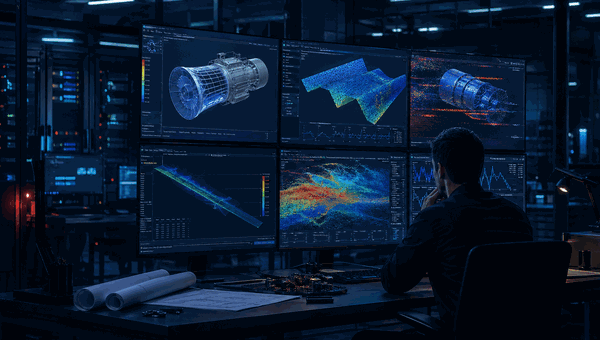
Researchers have uncovered the existence of the fast16 malware, a sophisticated cyber sabotage framework that predates the infamous Stuxnet by at least five years. First detailed by SentinelOne in 2026, fast16 represents the earliest known example of state-grade malware designed to target high-precision engineering and scientific workloads. Its core innovation lies in its ability to silently tamper with the results of engineering and simulation software, potentially leading to catastrophic real-world consequences. This report provides a comprehensive analysis of the technical and practical aspects of fast16, its implications for the cybersecurity landscape, and the lessons it offers for defenders and industry stakeholders.
Introduction
The discovery of fast16 marks a pivotal moment in the history of cyber-physical sabotage. Developed as early as 2005, this malware demonstrates that advanced, stealthy cyber operations targeting the integrity of scientific and engineering computations were not only possible but actively deployed well before the world became aware of Stuxnet. Unlike traditional malware focused on data theft or destruction, fast16 was engineered for long-term, undetectable sabotage, undermining the very trust in critical infrastructure and research environments.
Technical Analysis of fast16
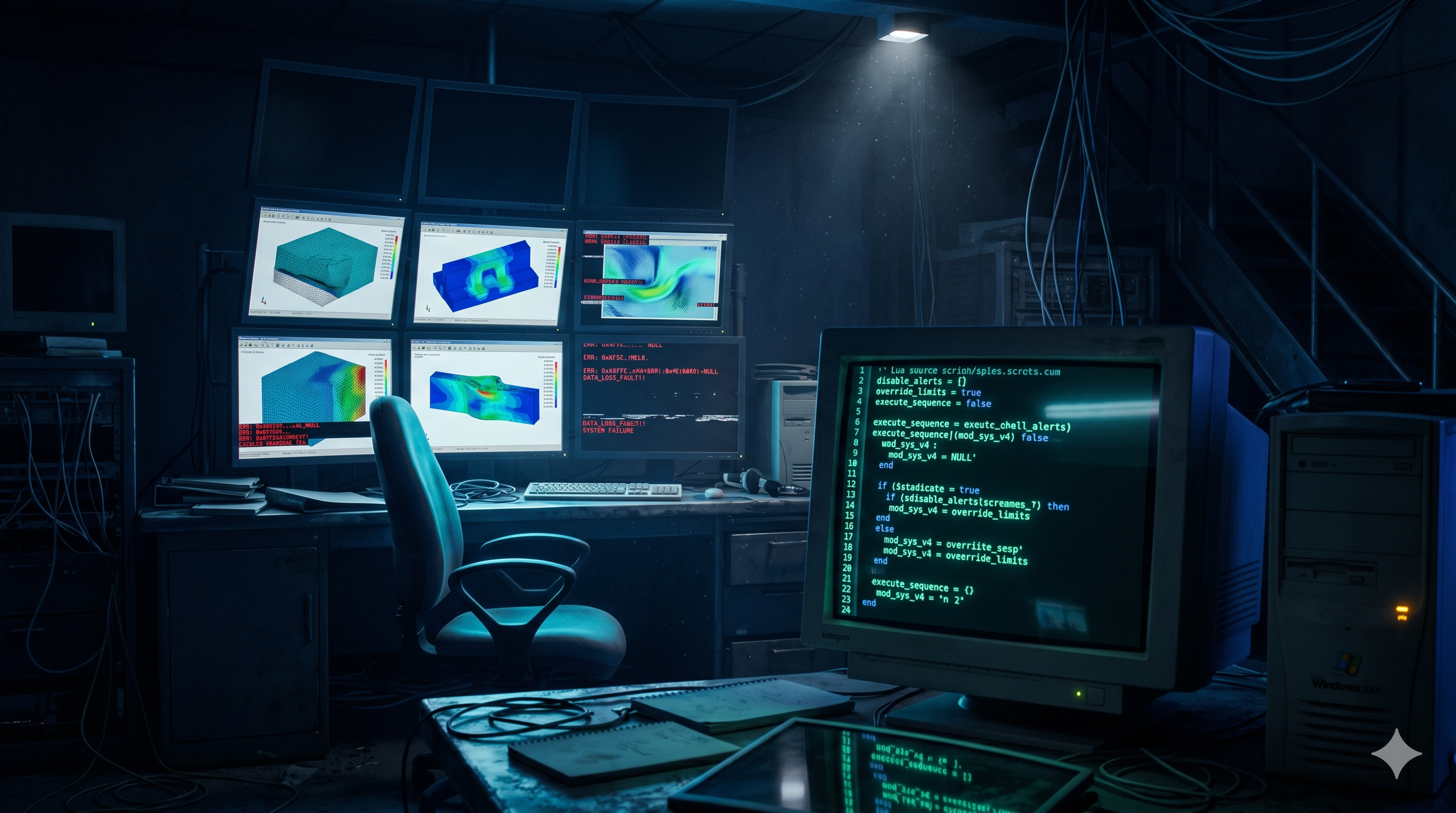
fast16 is built on a modular architecture, comprising a carrier executable (svcmgmt.exe), an embedded Lua 5.0 virtual machine, and a kernel driver (fast16.sys). The malware specifically targets high-precision calculation software by patching code in memory, subtly altering computational results without alerting users or system administrators.
The carrier executable acts as the initial loader, embedding the Lua virtual machine to execute modular, encrypted payloads. The kernel driver, fast16.sys, is loaded at boot and intercepts filesystem I/O, applying rule-based code patching to executables compiled with the Intel C/C++ compiler. This allows the malware to introduce systematic errors into floating-point calculations, affecting the integrity of engineering and scientific results.
Propagation is achieved through “wormlets” that exploit Windows service-control and file-sharing APIs, targeting weak administrative passwords and default configurations on Windows 2000 and Windows XP networks. The malware also performs environmental checks to avoid detection by security products, ensuring its persistence and stealth.
Key Innovations and Differentiators
The most significant innovation of fast16 is its focus on stealthy, long-term sabotage rather than immediate, overt damage. By introducing small, systematic errors into floating-point calculations, the malware can degrade engineered systems, corrupt scientific research, or cause catastrophic failures over time. Its use of an embedded Lua virtual machine for modularity and encrypted payloads was ahead of its time, predating similar architectures in later advanced persistent threat (APT) toolkits such as Flame.
Another key differentiator is the malware’s specificity. fast16 targets software compiled with the Intel C/C++ compiler, with patching rules tailored to three main software suites: LS-DYNA (used in nuclear research and engineering simulations), PKPM (Chinese structural engineering CAD software), and MOHID (a hydrodynamic modeling platform). This level of targeting demonstrates a deep understanding of the supply chain and the operational environment of its intended victims.
Security Implications and Potential Risks
The security implications of fast16 are profound and far-reaching. The malware’s ability to propagate across networks and infect multiple systems means that even redundant verification of calculations can be compromised. Its stealth and specificity allowed it to remain undetected for years, as evidenced by its near-zero detection rate on VirusTotal even a decade after being uploaded.
Organizations relying on high-precision engineering software, particularly in critical infrastructure, defense, and scientific research, are at significant risk. The potential for undetected, long-term sabotage raises the stakes for supply chain security and the integrity of third-party software dependencies.
Supply Chain and Third-Party Dependencies
fast16 highlights the critical risks associated with supply chain attacks on third-party engineering software. By targeting software compiled with the Intel C/C++ compiler and focusing on widely used engineering suites such as LS-DYNA, PKPM, and MOHID, the malware demonstrates how attackers can exploit trusted software supply chains to achieve strategic objectives. This underscores the need for rigorous software provenance and integrity checks, as well as comprehensive third-party risk management.
Security Controls and Compliance Requirements
Defending against threats like fast16 requires a multi-layered approach. Organizations must implement strict network segmentation and access controls to prevent lateral movement, regularly verify the integrity of critical software and simulation results—ideally on isolated systems—and deploy comprehensive endpoint protection capable of detecting anomalous kernel driver activity. Supply chain risk management is essential, including the vetting of third-party software and compiler toolchains, along with adherence to industry standards for secure software development and incident response.
Industry Adoption and Integration Challenges
The stealthy nature of fast16 and its targeting of niche, high-value software means that industry awareness and adoption of relevant security controls may lag behind the threat. Legacy environments, such as those running Windows 2000 or Windows XP, often lack modern security features, making them particularly vulnerable. Detecting subtle computational tampering requires specialized forensic tools, and organizations may have limited visibility into third-party software supply chains and compiler artifacts.
Vendor Security Practices and Track Record
Vendors of targeted software suites, including LS-DYNA, PKPM, and MOHID, have not publicly commented on the threat posed by fast16. The lack of detection and response mechanisms for such sophisticated sabotage highlights the need for vendors to adopt secure development practices, provide transparency in software provenance, and collaborate with the security community on threat intelligence sharing.
Technical Specifications and Requirements
The fast16 malware consists of a carrier executable (svcmgmt.exe) with an embedded Lua 5.0 virtual machine and encrypted payloads, a kernel driver (fast16.sys) that operates as a boot-start filesystem driver for Intel i386 architecture, and propagation mechanisms leveraging Windows service-control and file-sharing APIs. It specifically targets executables compiled with the Intel C/C++ compiler, applying 101 rule-based patterns to corrupt floating-point arithmetic and internal array values.
Authoritative Quotes and Sources
According to SentinelOne Labs, “fast16.sys selectively targets high-precision calculation software, patching code in memory to tamper with results. By combining this payload with self-propagation mechanisms, the attackers aim to produce equivalent inaccurate calculations across an entire facility.” Wired reports, “By automatically spreading across networks and then silently manipulating computation processes in certain software applications that perform high-precision mathematical calculations and simulate physical phenomena, Fast16 can alter the results of those programs to cause failures that range from faulty research results to catastrophic damage to real-world equipment.” SecurityWeek adds, “The Fast16 sabotage malware targeted high-precision computing workloads and could propagate through entire facilities.” These insights are corroborated by technical analysis and expert commentary, emphasizing the stealth and sophistication of the threat.
Cyber Perspective
From a cybersecurity perspective, fast16 is a watershed moment in the evolution of cyber-physical sabotage. It demonstrates that attackers can achieve strategic, long-term disruption by subtly corrupting the integrity of scientific and engineering computations, rather than relying on overt destruction or data theft. This approach is particularly insidious because it undermines trust in the very foundations of critical infrastructure and research, with potential consequences that may not be discovered for years.
For defenders, fast16 highlights the need for advanced threat hunting capabilities focused on kernel-level activity and memory patching, rigorous supply chain risk management—including the vetting of compilers and third-party software—cross-system verification of critical calculations using air-gapped or independently managed systems, and enhanced collaboration between software vendors, security researchers, and end-users to detect and respond to such threats.
The discovery of fast16 is likely to drive increased investment in supply chain security, secure software development practices, and advanced endpoint detection and response solutions. It also raises the bar for compliance and due diligence in sectors reliant on high-precision engineering and scientific software.
About Rescana
Rescana’s Third-Party Risk Management (TPRM) solutions are designed to help organizations identify, assess, and mitigate risks in their supply chain and third-party software dependencies. Our platform provides continuous monitoring, automated risk assessments, and actionable insights to ensure your organization’s vendors and partners adhere to the highest security standards. Whether you are concerned about legacy threats or emerging risks in your ecosystem, Rescana empowers you to proactively manage and reduce your cyber risk exposure.
We are happy to answer any questions at ops@rescana.com.
Authoritative Sources
SentinelOne Labs: https://www.sentinelone.com/labs/fast16-mystery-shadowbrokers-reference-reveals-high-precision-software-sabotage-5-years-before-stuxnet/
Wired: https://www.wired.com/story/fast16-malware-stuxnet-precursor-iran-nuclear-attack/
SecurityWeek: https://www.securityweek.com/pre-stuxnet-sabotage-malware-fast16-linked-to-us-iran-cyber-tensions/