Executive Summary
A highly sophisticated spear-phishing campaign attributed to the North Korean state-sponsored threat group ScarCruft (APT37) is actively targeting users—primarily in South Korea, by impersonating Microsoft security alerts. The campaign leverages fake Microsoft Account notifications to deliver a new, Python-based remote access trojan known as NarwhalRAT. This malware is distributed via malicious .lnk files embedded in ZIP archives, exploiting native Windows utilities such as PowerShell and curl.exe for payload delivery and execution. NarwhalRAT exhibits advanced capabilities including keylogging, screen and audio capture, file exfiltration, and sophisticated anti-analysis techniques. The campaign demonstrates a significant evolution in North Korean cyber operations, shifting from the previously observed RokRAT to a more evasive, modular, and fileless malware architecture. This report provides a comprehensive technical analysis, threat actor profile, exploitation details, victimology, and actionable mitigation strategies.
Threat Actor Profile
The campaign is attributed to ScarCruft (APT37), a North Korean advanced persistent threat group with a history of targeting South Korean entities, government agencies, and individuals. ScarCruft is known for its adaptive tactics, leveraging social engineering, spear-phishing, and custom malware to achieve espionage objectives. The group has previously deployed malware families such as RokRAT and BLUELIGHT, and is now observed using NarwhalRAT. ScarCruft demonstrates a high level of operational security, frequently rotating infrastructure and employing multi-stage payloads with anti-analysis features. The group’s campaigns often exploit geopolitical tensions and leverage themes relevant to their targets, such as Microsoft account security alerts, to increase the likelihood of successful compromise.
Technical Analysis of Malware/TTPs
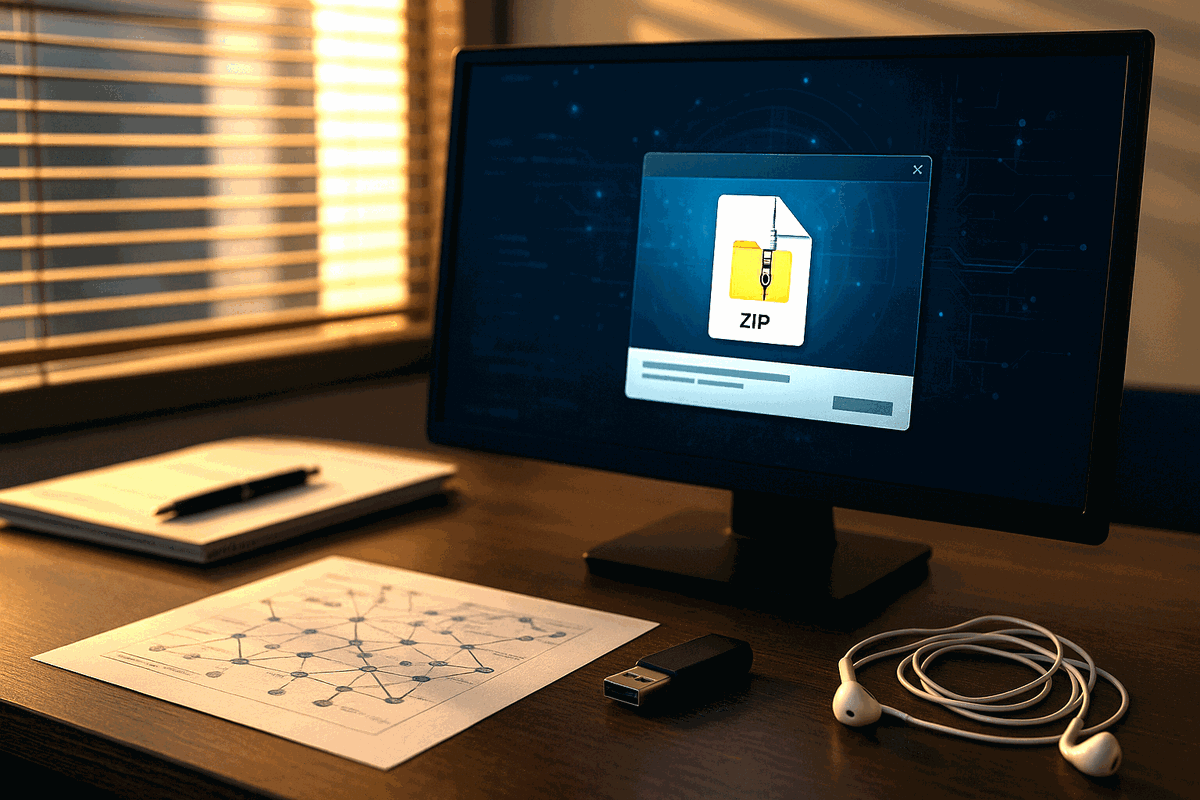
The attack chain begins with a spear-phishing email purporting to be from the Microsoft Account Team, warning recipients of "abnormal activity" and urging immediate password changes due to alleged OTP abuse. The email contains a ZIP archive, which, when extracted, reveals a malicious .lnk (Windows shortcut) file disguised as a legitimate advisory. Upon execution, the .lnk file abuses cmd.exe, PowerShell, and curl.exe to download additional payloads, including a legitimate Python interpreter and a Windows security catalog (.cat) file.
The initial stage leverages PowerShell and batch scripts to install NarwhalRAT. Persistence is achieved by creating a scheduled task named MicrosoftUserInterfacePicturesUpdateTackMachine, which is designed to appear benign while ensuring the malware is re-executed upon system reboot. The scheduled task launches the .cat file, which acts as a loader, executing the main NarwhalRAT payload directly in memory—a fileless technique that complicates detection and forensic analysis.
NarwhalRAT establishes command and control (C2) communication with Korean relay domains such as daehoat[.]com and novel21[.]co.kr. It also employs a secondary C2 channel using the pCloud cloud storage API, leveraging a "dead drop" resolver technique where the malware retrieves C2 instructions from files stored in cloud folders, identified by unique folderid and auth parameters. This dual-channel approach enhances resilience against takedowns and network filtering.
The malware’s capabilities are extensive. It can capture keystrokes, take high-resolution screenshots, record audio via the system microphone, enumerate and exfiltrate files, monitor active windows, collect data from USB devices, and execute arbitrary commands received from the C2 server. NarwhalRAT also incorporates anti-virtualization and anti-analysis checks, targeting environments such as Parallels Desktop, VirtualBox, and VMware to evade detection by security researchers. Exfiltrated data is staged in the %APPDATA%\naverwhale directory, mimicking the legitimate Naver Whale browser to further obfuscate its presence.
The campaign does not exploit a specific software vulnerability but rather abuses legitimate features of Microsoft Windows, PowerShell, and Python. The use of .lnk files, fileless execution, and cloud-based C2 channels represents a significant advancement in the group’s tradecraft.
Exploitation in the Wild
The campaign has been observed in the wild targeting South Korean users, particularly those likely to respond to Microsoft security alerts. The infrastructure supporting the campaign includes Korean relay domains and the pCloud cloud storage service for C2 operations. The use of .lnk files in ZIP archives, combined with native Windows utilities for payload delivery, allows the attackers to bypass many traditional email and endpoint security controls. The scheduled task mechanism ensures persistence, while the fileless execution and anti-VM techniques hinder detection and analysis.
The transition from RokRAT to NarwhalRAT marks a notable evolution in ScarCruft’s operational capabilities. The new malware exhibits enhanced evasion, modularity, and the ability to switch C2 channels dynamically. The campaign’s reliance on social engineering and abuse of trusted brands like Microsoft increases its effectiveness and reach.
Victimology and Targeting
The primary victims of this campaign are South Korean individuals and organizations, including government agencies, enterprises, and technology sector entities. The attackers specifically target users who are likely to respond to Microsoft account security alerts, leveraging the widespread use of Microsoft products and the urgency associated with account compromise notifications. The campaign’s focus on Korean relay domains and the use of Korean-language lures further indicate a strong regional targeting strategy. While the current wave is concentrated in South Korea, the techniques employed could be adapted for broader international campaigns.
Mitigation and Countermeasures
Organizations should implement a multi-layered defense strategy to mitigate the risks posed by this campaign. Email security solutions must be configured to detect and quarantine ZIP archives containing .lnk files, especially those referencing Microsoft security alerts. Endpoint detection and response (EDR) tools should monitor for the creation of suspicious scheduled tasks, such as MicrosoftUserInterfacePicturesUpdateTackMachine, and alert on unusual PowerShell and curl.exe activity, particularly when used to download executables or .cat files.
Network monitoring should be employed to detect outbound connections to known C2 domains, including daehoat[.]com and novel21[.]co.kr, as well as anomalous usage of the pCloud API from endpoints. Security teams should regularly audit the %APPDATA%\naverwhale directory for unauthorized files and investigate any presence of this directory on user systems.
User awareness training is critical. Employees should be educated on the risks of opening unsolicited email attachments, especially those purporting to be from Microsoft or other trusted vendors. Organizations should enforce the principle of least privilege, restrict the execution of PowerShell and scripting utilities where possible, and ensure that all systems are running up-to-date security patches.
Incident response plans should be updated to include procedures for detecting and remediating fileless malware and cloud-based C2 channels. Collaboration with threat intelligence providers and participation in information sharing communities can enhance situational awareness and facilitate rapid response to emerging threats.
References
- The Hacker News: Fake Microsoft Alerts Used to Deploy North Korean NarwhalRAT Malware
- Mallory.ai: APT37 Phishing Campaign Uses LNK Files and PowerShell to Deploy NarwhalRAT
- CyberSecurity News: Hackers Abuse LNK Files, PowerShell, and Python Loader to Deploy NarwhalRAT
- Genians Security Center: Analysis of APT37 NarwhalRAT Leveraging MS-Themed Phishing and Dead-drop C2
- MITRE ATT&CK: APT37
About Rescana
Rescana is a leader in third-party risk management (TPRM), providing organizations with a comprehensive platform to assess, monitor, and mitigate cyber risks across their supply chain and digital ecosystem. Our advanced threat intelligence and automation capabilities empower security teams to proactively identify and respond to emerging threats. For more information or to discuss how Rescana can help strengthen your organization’s cyber resilience, we are happy to answer questions at ops@rescana.com.